

As Asia’s premier Master’s Programme in Business Analytics, we are dedicated to offering students a top-tier education that prepares them to thrive in the dynamic world of data analytics.
Our programme caters to a diverse range of individuals — whether you are a recent graduate eager to sharpen your analytical skills, a professional aiming to pivot into business analytics, or an industry expert seeking to deepen your expertise.
If you are driven by a passion to solve real-world business challenges using data analytics for positive impact, NUS MSBA is the right place to start.


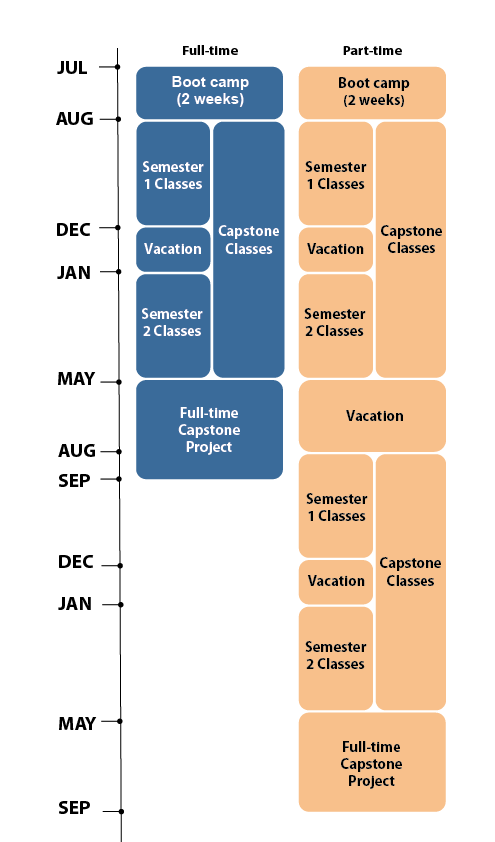
The Professional Consulting Capstone Course will be a year-long course in the form of capstone classes, industry analytics seminars, and a 3 – 6 month full-time^ capstone project.
^Part-time students are recommended to do their capstone project with the company they are working for.
Students will complete 5 essential courses to build a cross-disciplinary foundation for Business Analytics and engage in rigorous study beyond the assumed disciplinary borders. This covers the interface between computer science, statistics, and other professional disciplines in the NUS Education framework.
Click on each of the essential course* below to find out more.
We analyze price formation and economic performance in imperfectly competitive markets by using optimization, statistical and stochastic methods. Strategic interactions between the participants in these markets are emphasized and a theoretical framework is laid out. Theoretical models are analyzed with industry examples and datasets. |
This course aims to provide students with practical knowledge and understanding of basic issues and techniques in data management and warehousing with relational database management systems. The course covers data management concepts, conceptual (entity relationship model) and logical design (relational model) and database management (data definition, data manipulation, SQL) with relational database management systems. The course covers data warehousing concepts, data warehousing design and data warehousing with relational database management systems and tools.
This course provides the basic quantitative background for decision making problems in finance, operations management, and supply chain management. In this course, various operations research models in linear programming, network flow problems and integer programming will be covered. The emphasis is on model building, solution methods, and interpretation of results. Topics on decision making under uncertainty and simulation will also be discussed. Python will be used for software implementation.
This course aims to provide a foundation for data analytics techniques and applications. It aims at (1) Emphasizing on an understanding of intuitions behind the tools, and not on mathematical derivations; (2) Incorporating real-world datasets and analytics projects to help students bridge theories and practices; and (3) Equipping students with hands-on experiences in using data analysis software to visualize the concepts and ideas, and also to practice solving problems. The course covers commonly used analytics tools such as logistic regression and decision tree. Students are expected to get their hands dirty by applying the tools in the analytics software.
This course provides a general introduction to advanced data analytics methods. It is the sequel to the first foundation course (BT5124) and covers advanced analytics techniques, including supervised and unsupervised learning. Reinforcement learning will be briefly discussed. Deep learning models for unstructured data analysis will be covered. Students are expected to learn the methodological foundations of various machine learning and data mining algorithms, to understand the advantages and disadvantages of various methods, to use Python to run these data mining methods, and to learn how to handle unstructured data for business analytics.
In addition to essential courses, students are required to take three elective courses from at most two of the following vertical sectors.
These elective courses will help students delve deeper into understanding different analytic techniques required for specific industry sectors and build upon knowledge, concepts and skills learnt in essential courses. Through these elective courses, students innovate, devise and refine techniques and tools to solve complex problems.
Students who aspire to be a Business Analytics expert in other vertical sectors beyond the five below may take relevant advanced courses from the respective participating faculties, subject to approval by the Academic Committee.
Click on each of the elective vertical sectors* below to find out more.
Cloud Computing
This course aims to provide an overview of the design, management and application of cloud computing. The topics include virtualization, cloud computing environments, cloud application deployment, cloud use cases, data center architectures and technologies, cloud services fulfillment and assurance, orchestration and automation of cloud resources, cloud capacity management, cloud economics, case studies.
Applied Machine Learning for Business Analytics
This course aims to prepare graduate students for advanced data science topics and their application in business analytics. The course will investigate the integration of business know-how and advanced analytics technologies. The key deliverable of this course will be the skills to build the practical data science pipeline and utilize state of the art in machine learning.
Reinforcement Learning and Sequential Decision Making
Many tasks performed by AI agents can be formulated as sequential decision making problems. Machine learning in sequential decision making is often done using reinforcement learning. With the prevalence of AI agents, reinforcement learning is becoming increasingly important in many application areas such as large language and other foundation models, robotics, games, and multi-agent systems. This course covers the fundamentals of reinforcement learning, methods for scaling up the learning and sequential decision making processes, as well as selected applications. Topics include model-based and model-free reinforcement learning, exploration, Monte Carlo tree search, function approximation, and concept and techniques from the selected application area.
Hands-on with Business Analytics
Business analytics is the use of data to support business decisions. This course draws a unique blend of business strategies, theory and a practical hands-on experience with the tools and techniques to support the strategies. The course will take students through all the stages of an analytic project from design, data collection, execution and presentation. Through a learning-by-doing approach, students will engage in business cases, guided projects and a project of their own design. Lectures will cover a breadth of technical tools and statistical methods through the data pipeline in an organization. The course will especially emphasize on techniques for causal analysis and econometric identification.
Data Science for Online Marketplaces
In the digital age, the surge in data collection by online platforms, coupled with their unparalleled capability to tailor marketplace mechanisms, have revolutionized how markets operate. This course explores the applications of data science in digital marketplaces, focusing on how prominent platforms like Google Ads, Amazon, and Grab leverage data-driven strategies to improve key business metrics across various functional areas such as matching, pricing, and product assortment. Students will learn to apply data-driven tools to marketplace design, bridging theory and practice in important business problems.
Transforming Organisation with Data Storytelling
This course focuses on practical data storytelling to drive organisational data transformation. Participants will learn the power of data storytelling, integrating data insights into business operations for competitive advantage and ROI improvement. Real-life use cases enable participants to address real-world challenges effectively, ensuring day-one productivity. Students will develop data transformation methodologies and success criteria for measuring the approach and solutions.
Data Analytics in Banking
The objective of this course is to introduce typical functions and processes in traditional banking and services, and discuss in depth the latest development on how data and analytics enhance/accelerate those functions and processes. The future roadmap of banking is covered as well, together with fintech disruptions. Various data and analytics team structures are explored with their pros and cons.
Fintech, Enabling Technologies and Analytics
Fintech refer to emerging financial services (backed by technology). Technology companies are moving into financial services and financial institutions are looking to technology to enhance their services. As the two worlds merges, understanding of fintech will be increasingly relevant to the skillset of anyone seeking to work in technology or finance. This course provides a primer to current developments in fintech and the relevant technologies. Students will have an opportunity to learn from real world case studies and dive into technologies that are being used in the industry such as Blockchain and AI.
Quantitative Risk Management
The aim of this course is to provide an introduction to the probability and statistical methods used by financial institutions and supply chain managers to model market, credit and operational risk. Topics addressed include loss distributions, multivariate models, dependence and copulas, extreme value theory, risk measures, risk aggregation, risk allocation and supply chain risk management.
Economic Methods in Health Technology Assessment
This course offers a practical introduction to Health Technology Assessment (HTA)research, equipping students with the skills to conduct their own studies and comprehend research conducted by others. It covers fundamental principles of HTA and modeling techniques, with a focus on economic evaluation utilised across all stages of HTA research. From conceptualising studies to assessing cost-effectiveness and budget impacts of health technologies, students will gain hands-on experience in conducting economic evaluations using statistical software. Advanced topics and methods from recent HTA academic literature will also be explored, providing insight into the evolving frontier of the field.
Healthcare Transformation with Analytics
This module provides practical training in applying data analytics to current healthcare challenges in Singapore. It explores how data analytics can transform healthcare by examining real-life examples of its successful deployment in Singapore. Advanced analytics techniques like Generative AI, Large Language Models (LLMs), and deep learning are introduced, focusing on their potential to improve healthcare outcomes. Through hands-on workshops led by industry experts, students engage in exercises that solve healthcare problems using data analysis, gaining practical insights from real-world case studies into the application of data-driven solutions.
Information Technology in Healthcare
Discover how digital technologies and innovations are reshaping Information Technology in Healthcare. This course introduces key concepts like Electronic Health Records, Clinical Decision Support, and Standards for Interoperability. Students will gain exposure to workflow analysis, usability design, requirements gathering, and rapid prototyping. Explore emerging areas such as Telehealth, Social Drivers of Health, Public Health Analytics, and Change Management. By the end of the course, students will be equipped to propose and evaluate IT solutions that address real-world healthcare challenges, making them valuable contributors to innovation and transformation in health systems.
Applied Natural Language Processing
This course offers an in-depth exploration of Natural Language Processing (NLP) techniques, with an emphasis on their practical applications in data science. Students will build a robust foundation in text preprocessing and analytics, progressing to advanced topics such as text classification, machine translation, and sequence-to-sequence modeling. The course also covers Large Language Models (LLMs), exploring their architecture, training methodologies, and practical applications in the real world. By the end of the course, students will be proficient in developing NLP applications, utilizing LLMs to automate tasks, generate content, and address complex language-related challenges. This course equips students with the expertise required to excel in data science and leverage NLP across diverse fields.
Advanced Statistical Methods in Finance
The objective of the course is to familiarize the students with selected advanced methods in quantitative finance. The major topics to be covered are: – Realized volatility and high frequency data – Risk management under heavy-tailed distributional assumptions – Independent component analysis and its applications – Local parametric estimation of violatility
Deep Learning in Data Analytics
This course provides a comprehensive understanding of cutting-edge deep learning models and the core statistical concepts behind their successful applications to a wide range of machine learning problems. Models such as multilayer perceptrons, convolutional neural networks, recurrent neural networks, variational autoencoders and generative adversarial networks will be introduced and illustrated with applications to computer vision, natural language processing and text generation. Regularization and optimization techniques such as dropout, backpropagation, stochastic gradient descent and automatic differentiation will also be discussed, and students will learn to build and train deep learning models efficiently in Python for a variety of tasks.
*This list is not exhaustive and subject to change.
*GRE/GMAT is highly recommended from AY2025/26 onwards.
August Intake (AY 2027/28)
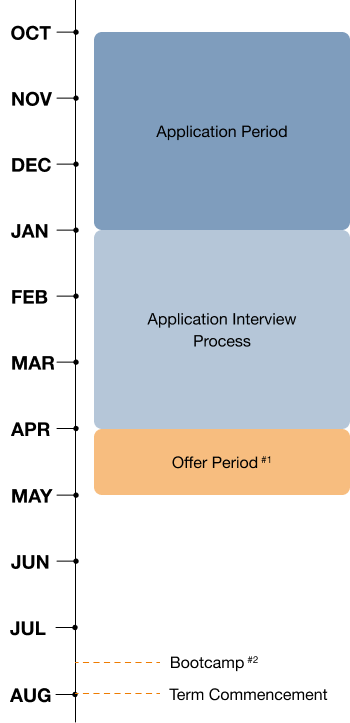
#1 Acceptance fee has to be paid within 14 calendar days upon offer.
#2 Bootcamp begins 2 weeks before term starts.
Timelines are indicative only. Applications are assessed on a rolling basis, and interview or offer dates may vary.
Tuition fee for Academic Year (AY) 2027/28 intake:
Full Programme Fee: S$87,550
Application Fee: S$100
The cost of travel, accommodation and miscellaneous expenses are not included and are to be borne by the participant.
Students are required to make an upfront payment of SGD $21,800 incl. GST (included in the tuition fees) within 14 calendar days upon acceptance into the programme, which is non-refundable and non-transferable.
| AY2027/2028 Intake | Full-Time Students | Part-Time Students |
|---|---|---|
| Full Programme Fees (Inclusive of 9% GST) | S$87,550 | S$87,550 |
| Acceptance Fee | S$21,800 | S$21,800 |
| Semester 1 | S$32,875 | S$16,437.50 |
| Semester 2 | S$32,875 | S$16,437.50 |
| Semester 3 | – | S$16,437.50 |
| Semester 4 | – | S$16,437.50 |
Important things to note:
Students will also be charged a miscellaneous fee in their student bill. Miscellaneous student fees help meet costs incurred by the University in providing services to the student community that are either not covered or only partially covered by the tuition fee and government subsidy. These services include healthcare for students; facilitating student cultural, social and recreational programmes; and maintaining the shuttle bus service, IT network and other essential campus infrastructure and services.
All students, whether registered on a full-time or part-time basis, are charged the miscellaneous student fees. These are due at the same time as the tuition fees. The miscellaneous student fees payable are set out here.
Taking the NUS MSBA programme is an important decision in your life. We have a number of merit-based scholarships to help you in transforming your personal and professional life.

At NUS BAC, we offer the BAC Merit Scholarship to support outstanding candidates in the NUS MSBA programme. Interested candidates may apply for the scholarship after completing their admission application. Only one scholarship may be awarded to each eligible candidate, and the scholarship cannot be combined with other rebates, scholarships, corporate sponsorships, or financial awards.
Only fully completed applications with all required fields and supporting documents will be assessed for the NUS BAC Merit Scholarship. Incomplete applications will not be considered. Only successful scholarship applicants will be notified, and scholarship outcomes will be communicated together with the admission offer.
The scholarship application deadline for AY2027/2028 intake is 15 December 2026. All scholarship decisions are made at the discretion of NUS BAC and are subject to change. Decisions are final and not subject to appeal.
The BAC Merit Scholarship is open to all NUS MSBA candidates. Each scholarship is valued at S$30,000. It is awarded based on merit, taking into consideration the candidate’s academic excellence, professional achievements, and leadership potential. Interested candidates may apply for the scholarship through the GDA3 platform after completing their admission application.
The NUS ASEAN Master’s Scholarship is a continuation of the DiscoverNUS scheme. It is an exclusive bond-free scholarship that covers full tuition fees for the normal candidature period of a Master’s Degree programme at NUS. The scholarship may be offered only to candidates who have met all the following requirements:
A separate application to be considered for the scholarship is not necessary.
Recipients of the scholarship may not concurrently hold any other scholarship, fellowship, bursary, grant, award or allowance without notifying NUS. If a recipient withdraws from the University and/or terminates the scholarship prematurely, NUS reserves the right to impose repayment of all scholarship monies disbursed.
For more details, please click here.
The SG Digital Scholarship (Postgraduate) is an industry scholarship that empowers individuals interested in pursuing tech or media-related studies at the Master’s or PhD level. Individuals pursuing postgraduate studies in specialised tech or media-related areas such as Artificial Intelligence, Analytics, Quantum Technologies, Immersive Media, and Film Studies can chart their future with this scholarship.
To find out more about your eligibility and how to apply for this scholarship, please visit here.
The objective of the Financial Training Scheme (FTS) is to encourage the development of financial sector expertise by providing financial support for programmes which aim to enhance the skills and capabilities of the Singapore financial sector workforce. It encourages the acquisition of work skills to enter new or developing business areas, or in developing more sophisticated or specialist skill sets.
Learn more about the FTS here.
The Institute of Banking Financial Standards Trading Scheme (IBF-STS) provides financial support for training and assessment programmes accredited under the IBF Standards. The IBF Standards is a structured competency framework that sets out benchmarks for professional achievement to raise the standard of Singapore’s financial services workforce and training providers. Training and assessment programmes under the IBF Standards are accredited by the Institute of Banking and Finance. These programmes provide job-specific and practice-oriented training that are benchmarked to international standards.
Learn more about the IBF-STS here.
The MOH Holdings (MOHH) Healthcare Scholarships is awarded to local undergraduates and graduates who have a passion for contributing to Singapore’s public healthcare sector. The scholarship will provide fresh graduates rewarding and challenging careers via a structured job exposure programme and aims to groom the next generation of leaders in the healthcare industry.
Eligible applicants who are admitted to the MSBA programme and interested in Healthcare Data Analytics area are eligible to apply for MOHH Health Graduate Studies Award (HGSA). The HGSA is offered to final year undergraduates or recent university graduates who are keen to pursue a Masters degree in selected health science or healthcare-related disciplines: Medical Informatics and Data Analytics.
To find out more or to apply for HGSA, please visit here.
Set up in 1991 by the Tanjong Pagar Citizens’ Consultative Committee with funding from the public to commemorate the contributions made by Mr Lee Kuan Yew to Singapore, the Lee Kuan Yew (LKY) Scholarship marks Singapore’s continuous effort to recognise outstanding individuals with the aptitude and inclination to contribute to our society.
Since its inception, many LKY Scholarship holders have gone on to make significant contributions across various fields including the Public Service, business, law, consulting, healthcare, the arts, and academia.
Learn more about The Lee Kuan Yew Scholarship here.
The CIMB ASEAN Scholarship is committed towards helping young talent in need to realise their dreams. Going beyond financial support, the Scholarship programme provides exciting professional development and a mentor support system designed to empower the region’s young talent to turn their lives around and make a difference for those around them.
In recognising the evolving nature of the banking industry, CIMB welcomes applicants from a wide variety of academic disciplines such as applicants studying Computer Science, Data Science and Psychology, apart from degrees traditionally associated with a career in banking such as Accounting, Economics, Finance.
To find out more, please visit here.
The application deadline for NUS MSBA AY2027/2028 intake is 31 January 2027.
The application deadline for BAC Scholarships is 15 December 2026.
Check out our Application Checklist and ensure you have all the application materials ready.
Please note that your application will be considered complete only after all mandatory documents are submitted and the application fee has been paid.
You will need an account to start your online application. You can use this account to save your progress and return later to complete the application.
Please login to your account to continue with your application. Please save your application form regularly to prevent any loss of information.
© National University of Singapore. All Rights Reserved.