
A Global Career Transformed By Data
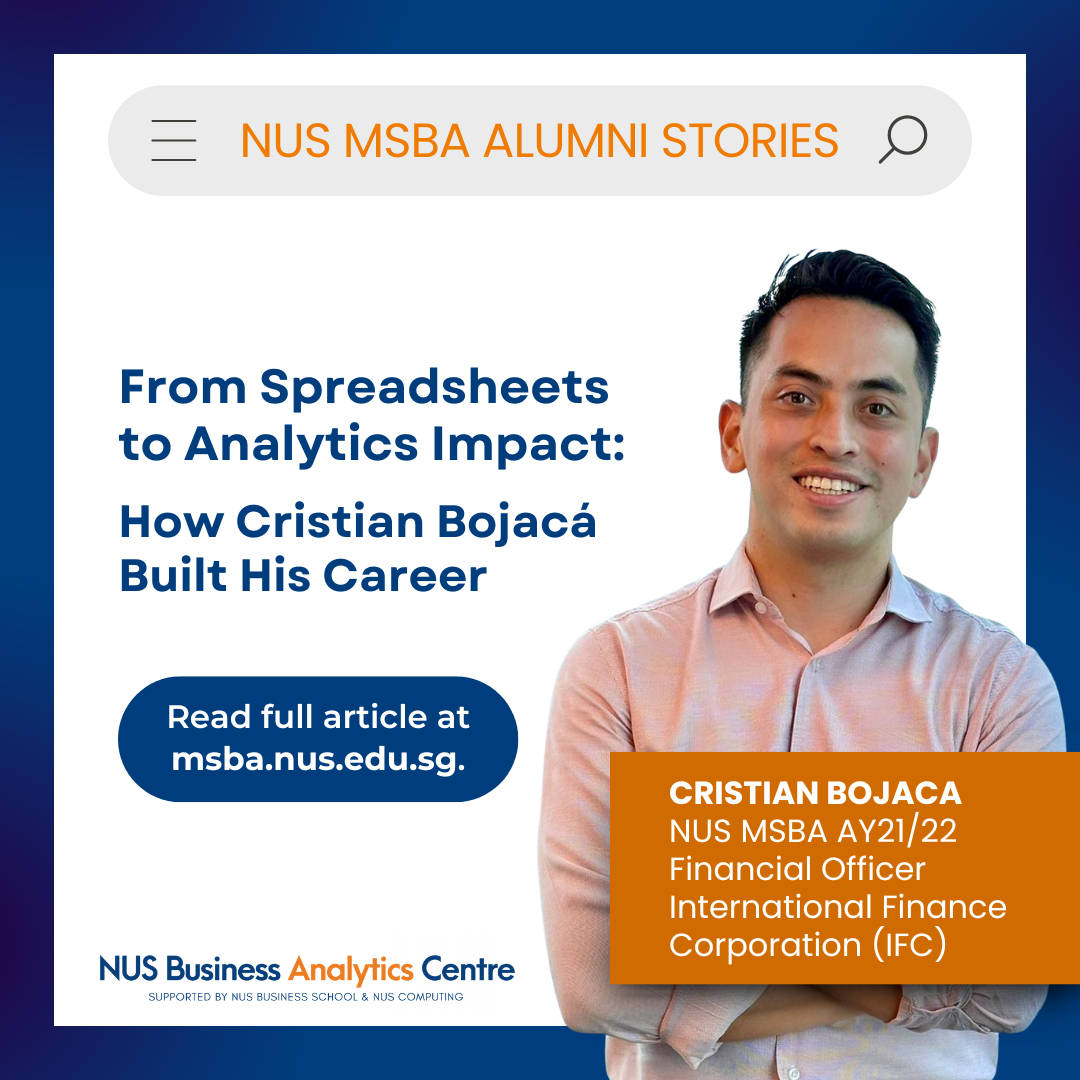
For Cristian Bojacá, the NUS Master of Science in Business Analytics (MSBA) wasn’t just a career boost, it was a turning point. Hailing from Colombia, Cristian had built a solid foundation in economics and finance, with roles in central banking and derivatives trading. However, he saw the growing potential of data science to unlock smarter, faster, and more impactful decisions.
Graduating in 2022, Cristian credits the NUS MSBA for empowering him to move from intuition-led decisions to data-driven strategy, combining his economics and finance background with cutting-edge analytics. Today, as a Financial Officer at the International Finance Corporation (IFC), part of the World Bank Group, he applies analytics to design financial instruments that support sustainable development in emerging markets.
“The NUS MSBA helped me make the leap from traditional finance into a role where analytics fuels global development outcomes.”
Why NUS MSBA: A Career Pivot Grounded in Curiosity and Experience
Cristian’s academic and professional foundation in Economics and Finance began at the Central Bank of Colombia, where he worked on macroeconomic research and policy analysis. Later, as a derivatives trader in the insurance sector, he faced a challenge that many finance professionals encounter: access to large volumes of data, but a lack of advanced tools to truly unlock its value.
“I realised too many decisions were still being made in spreadsheets. I wanted to bridge that gap, to learn how to apply machine learning and predictive analytics to real business problems.”
That realisation brought him to the NUS MSBA, a programme he chose for its strong blend of technical depth, applied learning, and business relevance.
Learning Through Challenges and Collaboration
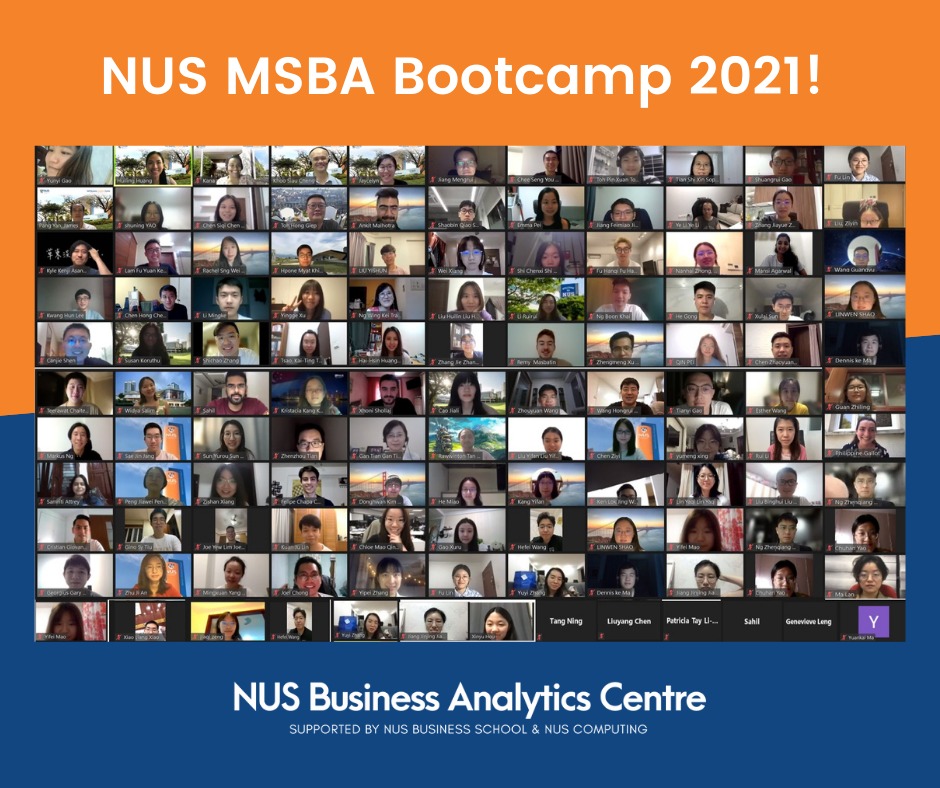
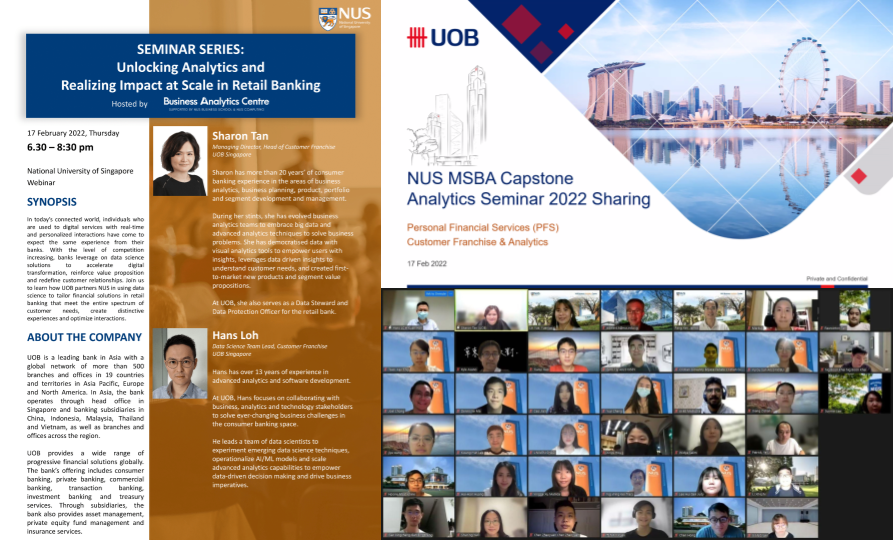
Joining the programme during the pandemic meant adapting to hybrid learning, but Cristian made the most of it. A key highlight of his time at NUS was the capstone project, where he worked with a regional insurance firm to build predictive underwriting and risk scoring models, a project that linked closely to his prior experience in finance.
He also found deep value in the diverse cohort of classmates from Asia, Europe, and Latin America.
“Our team brought a variety of perspectives to every discussion. Whether tuning a machine learning model or designing a dashboard, we always found strength in collaboration.”
Bridging Technical Rigour and Development Finance at IFC
Now at IFC, Cristian draws daily on the skills he honed during MSBA. Whether running Monte Carlo simulations, modelling credit risk, or analysing cashflow structures, the programme gave him the analytical and business acumen to thrive in complex, high-stakes environments.
“The ability to shift between Python notebooks, SQL queries and Bloomberg terminals, while presenting clear insights to senior stakeholders, is a direct outcome of my time at NUS.”
Today, Cristian supports structured finance deals that reduce FX risk, mobilize capital, and drive development impact, using analytics to power smart decisions in challenging markets.
Advice for Future NUS MSBA Candidates: Shift Your Thinking
To future NUS MSBA students, Cristian offers this advice:
“Don’t just learn tools. Learn to think differently. Ask better questions, validate assumptions with data, and stay grounded in business outcomes.”
He emphasises that technical excellence means little without business relevance, and that the true value of analytics lies in solving real-world problems.
“The NUS MSBA didn’t just teach me how to model. It helped me connect finance, data and purpose, and gave me the confidence to navigate across industries.”
© National University of Singapore. All Rights Reserved.