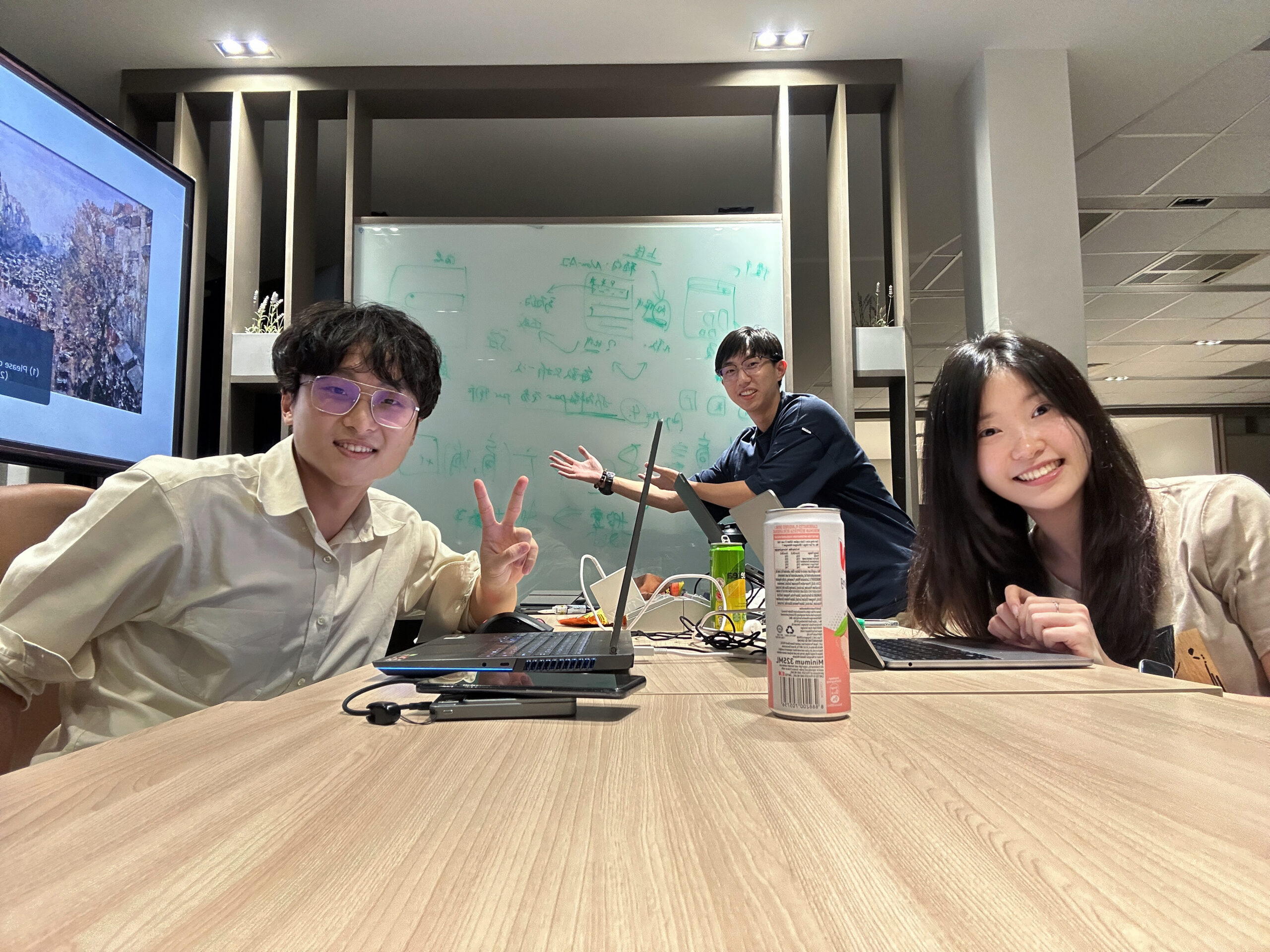
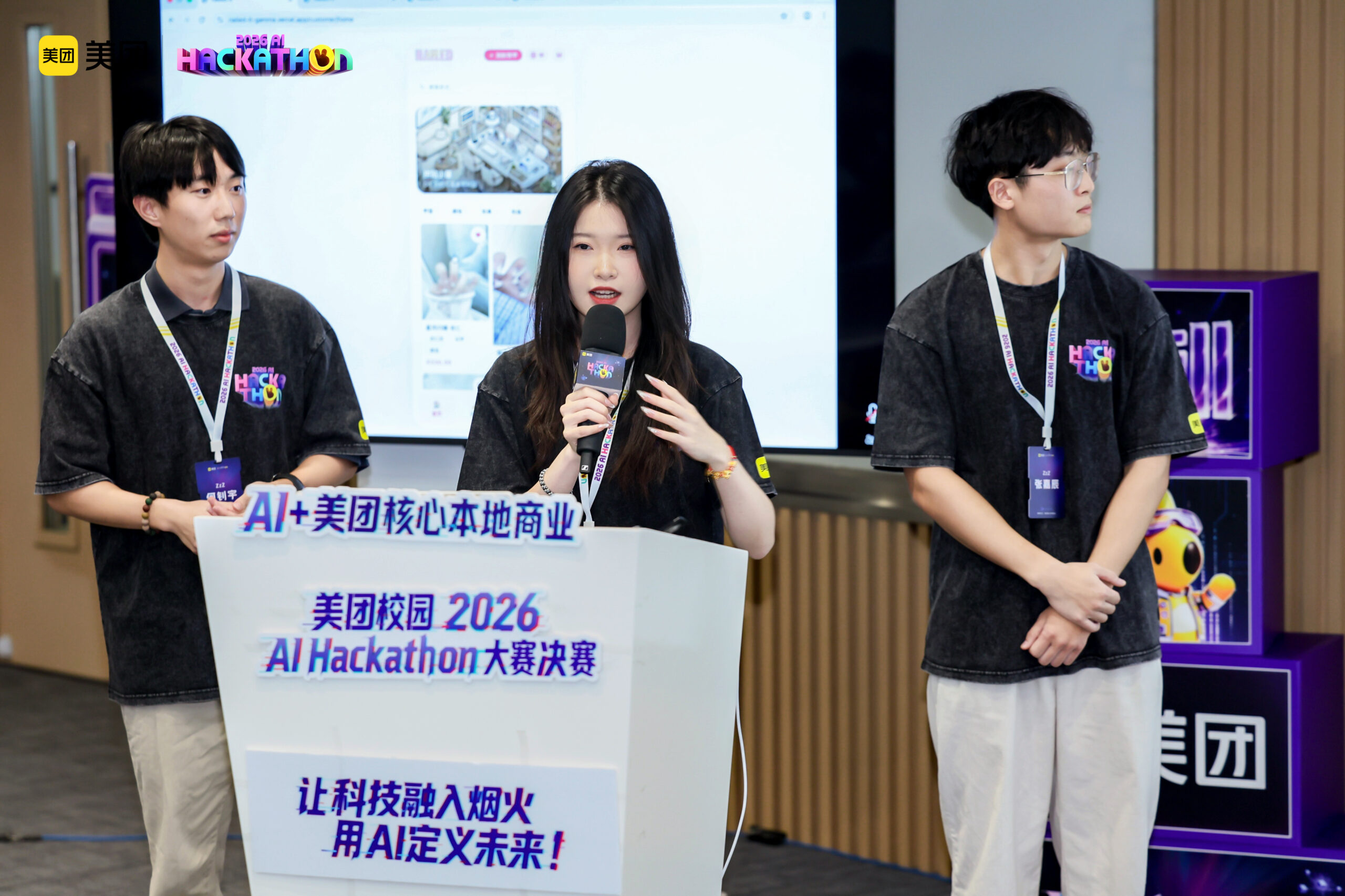
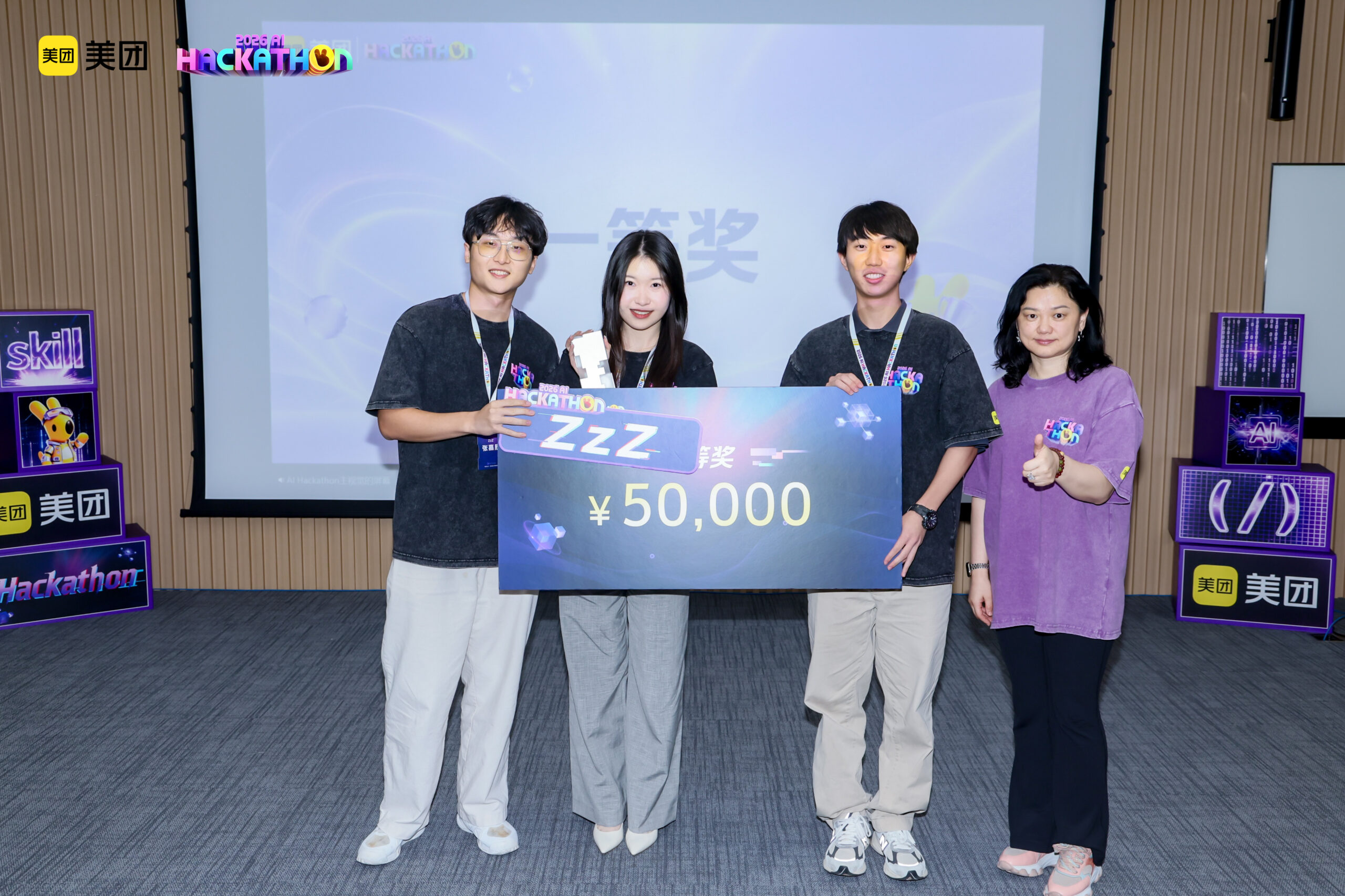
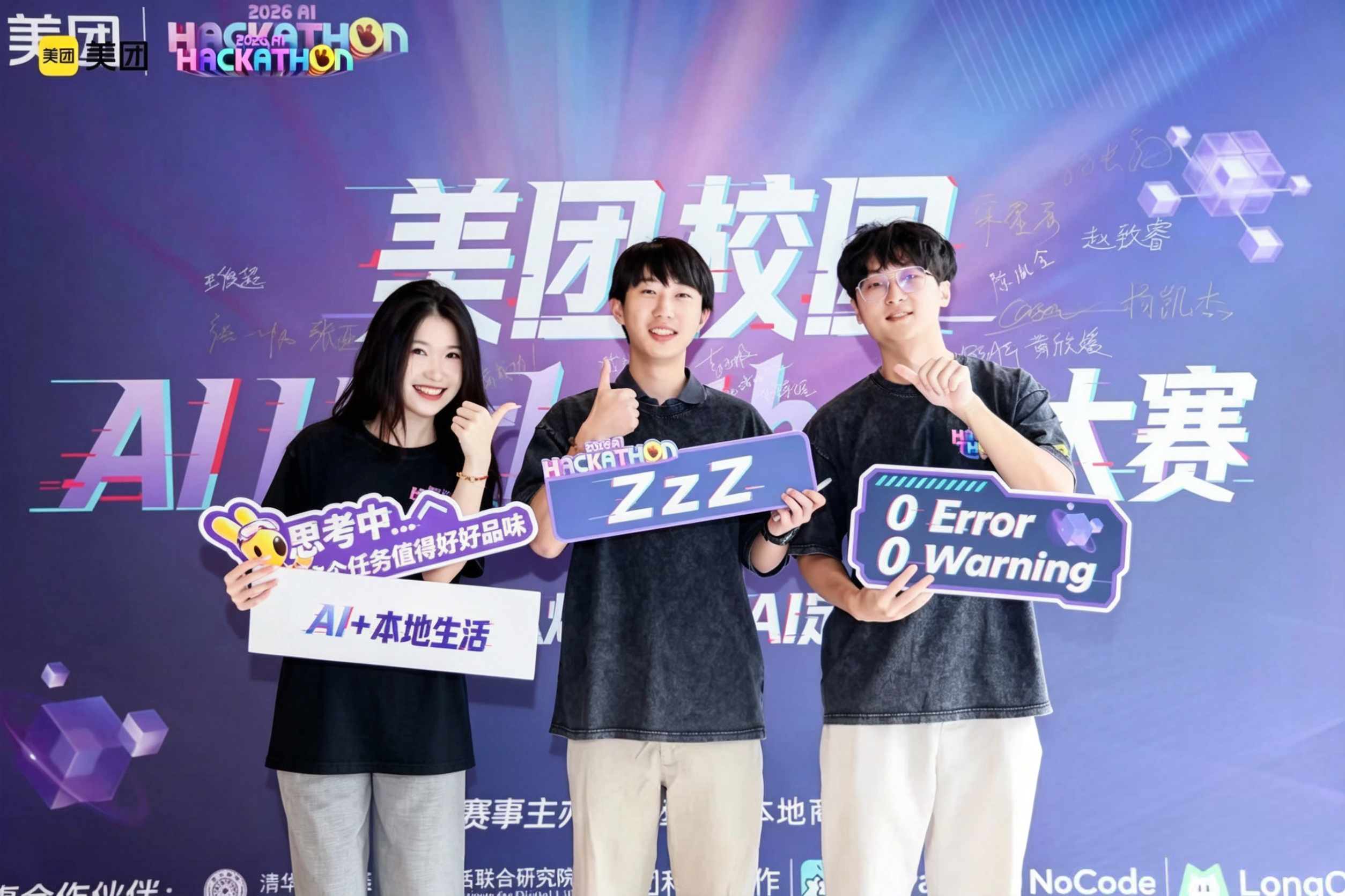
When NUS Master of Science in Business Analytics (MSBA) students (Zhang Yingzhi, Zhang Jiachen and He Zhaoyu) took home First Prize at the Meituan AI Competition in Beijing, it marked more than just a competition victory. It was the culmination of months of late nights, teamwork and the application of knowledge gained throughout the NUS MSBA programme to solve a real-world business challenge with artificial intelligence.
Competing against teams from leading universities across China, the trio impressed judges with an AI-powered platform that reimagines the nail salon booking experience, combining virtual nail try-on, intelligent pricing and business operations into a seamless solution for both customers and merchants.
Turning Friendship into Innovation
The three teammates first met through the NUS MSBA programme, where they bonded over board games and tennis. Their journey as teammates, however, was shaped by resilience.
Earlier in the year, they had participated in the NUS-SYNAPXE-IMDA AI Innovation Challenge 2026 but fell short of reaching the finals. Rather than viewing it as a setback, they used the experience to reflect on how they could improve their product thinking, technical execution and collaboration.
When one teammate later discovered the Meituan AI Competition, the timing felt right.
The challenge’s focus on AI-powered business solutions aligned perfectly with an idea they had long wanted to pursue. Drawing on lessons from their previous competition, the team came together once again. This time, stronger, more experienced and determined to push their ideas further.
Solving a Real Business Problem with AI
The team’s award-winning solution addressed a common frustration faced by both nail salon customers and merchants.
For customers, booking a nail appointment often involves lengthy conversations, multiple image exchanges and uncertain pricing. For merchants, responding to repetitive enquiries while managing appointment schedules can be equally time-consuming and inefficient.
To tackle these challenges, the team developed an AI platform capable of understanding nail design images at a component level. Acting as a “digital eye”, the system analyses elements such as nail shape, colours, patterns, extensions and decorations before automatically generating personalised price quotations and highly accurate service duration estimates based on each salon’s pricing structure.
The platform also features AI-powered virtual nail try-on, allowing customers to preview designs on their own hands before making a booking decision.
Beyond simplifying the customer experience, the solution helps salons optimise operations through a multi-agent AI assistant that analyses customer preferences, identifies emerging trends, recommends promotional strategies and streamlines catalogue management.
Rather than developing standalone AI features, the team focused on creating an integrated ecosystem where customer interactions continuously generate insights that help merchants make smarter business decisions.
Innovation Driven by Purpose
What ultimately set the team’s solution apart was its focus on solving real user problems rather than simply showcasing AI capabilities.
Beyond AI-powered virtual nail try-on and instant quotations, the team developed an interactive nail-design feature that allows customers to mix and match design elements to create personalised nail art. On the merchant side, a multi-agent AI assistant helps automate bookings, analyse customer preferences and identify emerging trends to support business growth.
By connecting every feature through a shared understanding of nail design, the team created an integrated platform that delivers value to both customers and merchants, an approach that resonated strongly with the judges.
From Long Weekends to First Prize
Building the award-winning solution required two months of dedication alongside the team’s full-time capstone internships. Evenings and weekends were spent refining ideas, developing the product and preparing for the finals, often working late into the night in pursuit of continuous improvement.
Their efforts culminated in the in-person finals in Beijing, where they competed as the only overseas team among 12 finalists. Presenting before Meituan’s technical leaders and product owners gave them valuable industry insights and the opportunity to exchange ideas with students from universities across China.
When their team’s name was announced as the First Prize winner, it was a moment of surprise, relief and immense pride, a fitting reward for months of perseverance, teamwork and innovation.
The Value of Faculty Mentorship
The team’s success was further strengthened by guidance from Professor James Pang, whose mentorship helped sharpen both the product and the team’s storytelling.
During a mock presentation before the finals, Professor Pang encouraged the team to simplify their narrative by presenting an overarching visual that connected the customer and merchant journeys into one coherent ecosystem. This transformed a feature-heavy presentation into a clear and compelling story that resonated with the judges.
His feedback also influenced product improvements, including the addition of an AI design refinement feature that allowed users to fine-tune AI-generated nail designs during the demonstration.
Even seemingly small details made a difference. Prof Pang suggested replacing a website URL with a QR code, enabling judges to access and experience the product instantly during the presentation, an adjustment that helped make the solution more accessible and memorable.
Learning Beyond the Classroom
For the team, the competition showcased how the NUS MSBA programme prepares students to translate classroom knowledge into practical innovation.
The programme’s strong emphasis on hands-on coding, AI-native development and real-world projects equipped the team with the technical skills needed to rapidly prototype and build sophisticated AI systems.
Modules such as “Advanced Analytics and Machine Learning” introduced concepts in agentic AI workflows that directly informed the development of their multi-agent operations assistant.
Equally valuable was “The Analytics Founder”, which strengthened their product thinking by teaching them how to identify genuine customer pain points, validate market opportunities and develop commercially viable AI solutions.
Together, these experiences enabled the team to combine technical excellence with business strategy, an essential factor in developing an AI solution that addressed real industry needs.
Building Ideas into Impact
Reflecting on the experience, the team hopes more students will take the first step towards building their ideas.
Their advice is simple: start before everything feels perfect.
What began as a modest idea, using AI to interpret nail design images, eventually evolved into a comprehensive AI platform connecting customers and merchants through an intelligent business ecosystem.
For students interested in participating in future AI competitions, they believe technical expertise alone is no longer enough. The most impactful solutions are those that solve genuine problems, create sustainable business value and combine innovation with strong product thinking.
Their journey demonstrates exactly what the NUS MSBA programme strives to cultivate: graduates who can bridge analytics, AI and business to create solutions with real-world impact.
© National University of Singapore. All Rights Reserved.