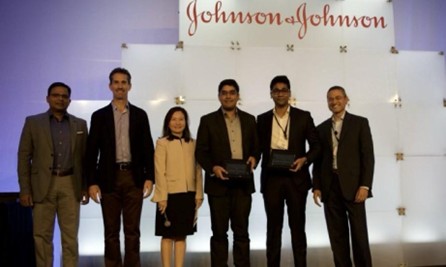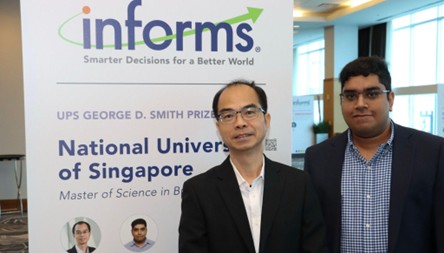
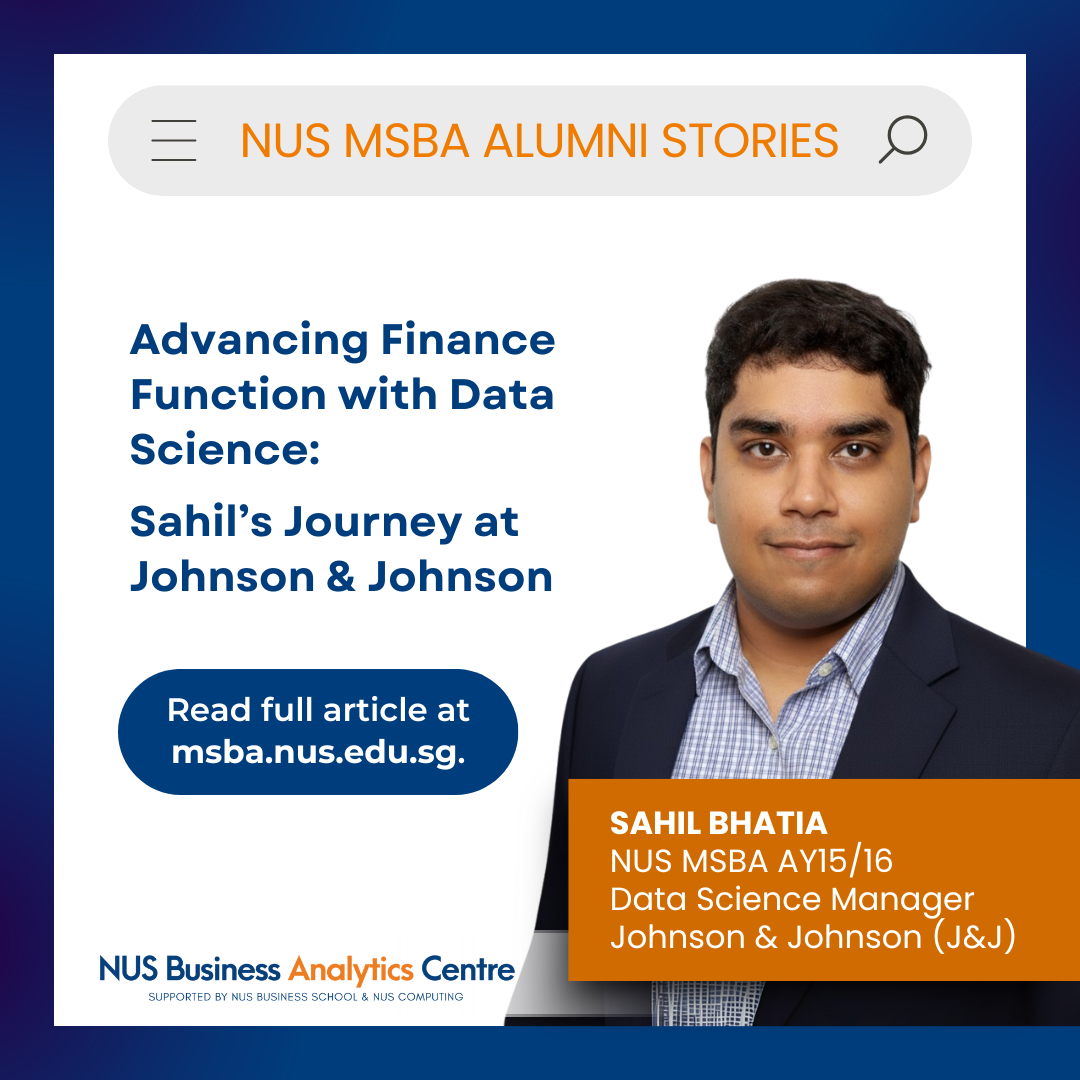
Sahil Bhatia’s career journey is a testament to how strong foundations in business analytics can unlock global opportunities. Originally from Delhi, India, Sahil was part of the NUS Master of Science in Business Analytics (MSBA) AY2015/2016 cohort. Today, he is a Data Science Manager in Johnson & Johnson’s Global Finance organisation, based at the company’s headquarters in New Jersey, where he helps shape J&J’s advanced analytics and AI roadmap.
Discovering the power of analytics
Trained as an engineer, Sahil began his career at EXL (Citibank) and ZS Associates, where he saw first-hand how data-driven strategies could influence high-impact decisions in the financial services and pharmaceutical sectors. While these experiences gave him valuable industry exposure, he realised much of his knowledge was self-taught.
“I wanted a structured, rigorous education to deepen my foundations and scale my impact,” he reflects. Singapore’s position as an APAC hub, combined with the academic rigour and strong industry connections that NUS MSBA provides, made the programme a natural next step.
Memorable moments at NUS MSBA
For Sahil, the capstone programme’s industry seminars were a standout highlight, offering direct insights into how leading companies turn data and analytics into transformative business impact. “It was eye-opening to hear from leaders across industries reimagining their organisations with data, analytics and digital capabilities,” he recalls.
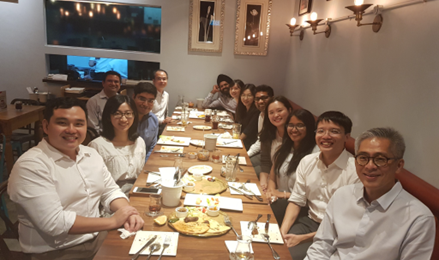
Beyond the classroom, late-night project work and spirited “kopi break” debates with peers created lasting memories. Working with classmates from diverse professional backgrounds sharpened his ability to collaborate and communicate, skills he continues to draw on every day.
Building skills and opportunities
The NUS MSBA gave Sahil a strong technical core and a business-first mindset. He deepened foundations in statistics and machine learning, big data and data engineering, and cloud analytics, and learned to take solutions end to end – from development through deployment. Equally important, applied projects mirrored real-world conditions, teaching him to define problems clearly, deliver on tight timelines, and communicate insights effectively.
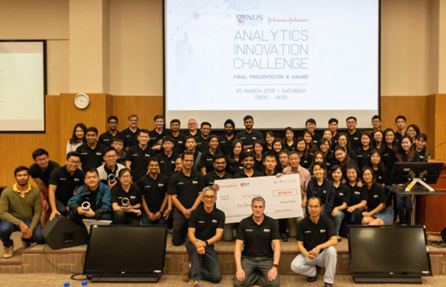
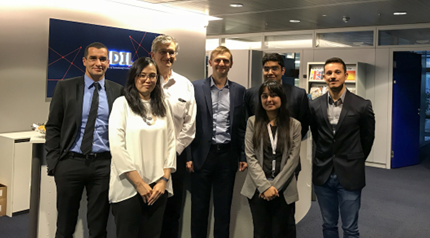
These skills translated directly into opportunities. His capstone project with Johnson & Johnson, focused on predictive sales forecasting, led to a full-time role as J&J built its data science capability in Global Finance. Presenting his NUS MSBA work to a Luxembourg delegation later opened the door to an applied research role at the Luxembourg Institute of Science and Technology (LIST), where he partnered with leading European firms on Industry 4.0 initiatives.
Taken together, the NUS MSBA gave Sahil three durable strengths that he still uses today: a business-first approach to framing problems, a production-minded way of building solutions people actually adopt, and clear storytelling that earns executive trust.
A global career in data science
Since returning to Johnson & Johnson in Singapore and later moving to the U.S., Sahil has played a pivotal role in advancing the company’s global data science and AI agenda. His team has delivered key capabilities such as predictive models for sales, cashflow, and operating expenses, giving senior leaders early visibility into risks and opportunities. More recently, they have launched Generative AI pilots to accelerate insight generation and enhance the finance workforce experience.
Sahil’s work has been recognised across the organisation: his team’s project was awarded Best Project at J&J’s Global Data Science Showcase in 2019, selected from over 350 global submissions. Beyond his role, he remains closely connected to NUS MSBA — co-leading workshops, representing the programme at international conferences, and supporting capstone projects that have built a strong talent pipeline of 10+ NUS MSBA alumni within J&J.
Advice for future NUS MSBA students
Approach the programme with curiosity, flexibility, and a commitment to continuous learning. The field of analytics is evolving at an unprecedented pace, and staying open to new ideas, tools, and methods will set you up for long-term success. Embrace Generative AI and other emerging capabilities. AI is already fundamentally reshaping how organisations and individuals operate.
To unlock transformational value, pair technical depth with industry understanding, strong business context, and the ability to lead change. At the same time, don’t lose sight of the fundamentals: build deep domain expertise, develop operational fluency in how your business actually runs, and design solutions that plug into real decision workflows. Finally, cultivate resilience. Priorities will shift, data will evolve, and new technologies will emerge. Treat change not as a disruption but as an opportunity to adapt, grow, and lead.
© National University of Singapore. All Rights Reserved.