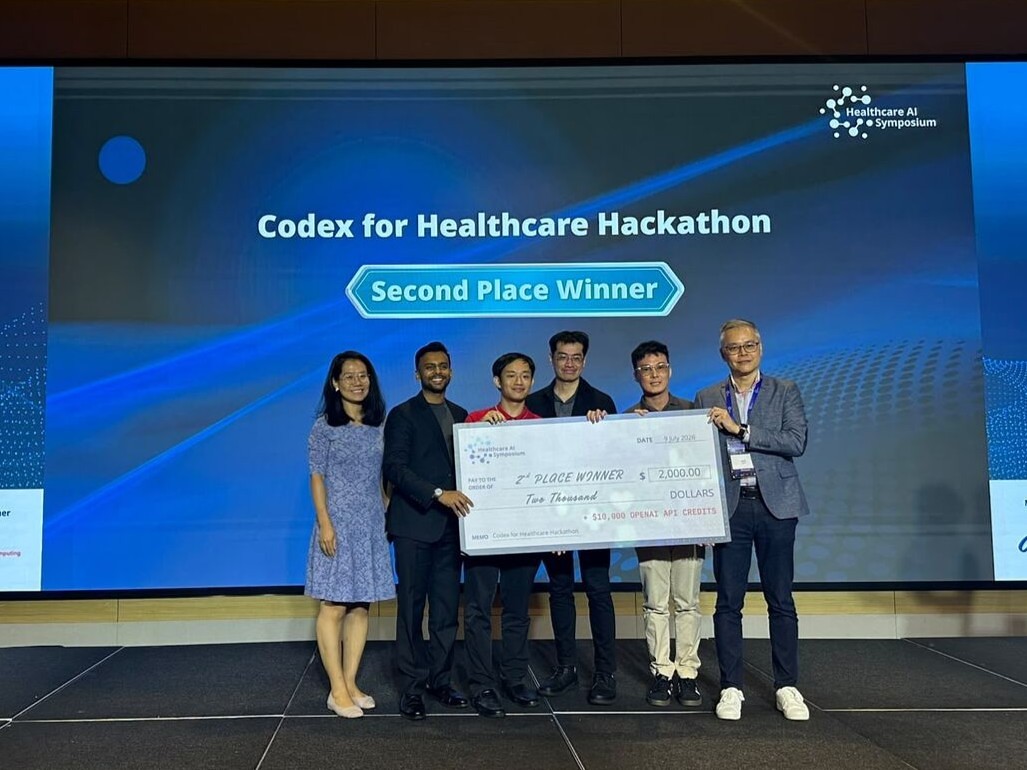
When NUS Master of Science in Business Analytics (MSBA) alumni Benjamin Zhou, Nicholas Tan and Yew Chong Sim set out to compete in a national hackathon, they were driven by more than the excitement of building an AI solution. They saw an opportunity to tackle one of healthcare’s most pressing challenges, helping people live healthier, longer lives.
Their efforts culminated in an award-winning solution that demonstrated how artificial intelligence can support the early detection of frailty, showcasing the impact of combining technical expertise, business thinking and a shared passion for solving meaningful real-world problems.
Turning Passion into Purpose
Having previously worked together on healthcare-related challenges, the team was immediately drawn to the hackathon’s focus on longevity.
“We’ve tackled previous healthcare challenges before. When this opportunity came up to address the longevity problem on a national platform, we leapt at the chance to work on something that truly mattered to us,” they shared.
Their shared interest in healthcare innovation, combined with complementary strengths across analytics, product thinking and technical development, laid the foundation for a strong collaboration.
Although each teammate brought different perspectives and strengths, the healthcare problem they were tackling was entirely new. Rather than rushing into development, the team intentionally devoted a significant portion of their limited time to discussion and problem framing.
These conversations helped them move steadily from uncertainty to a well-defined solution, ensuring every feature addressed a genuine user need.
Building AI for Preventive Healthcare
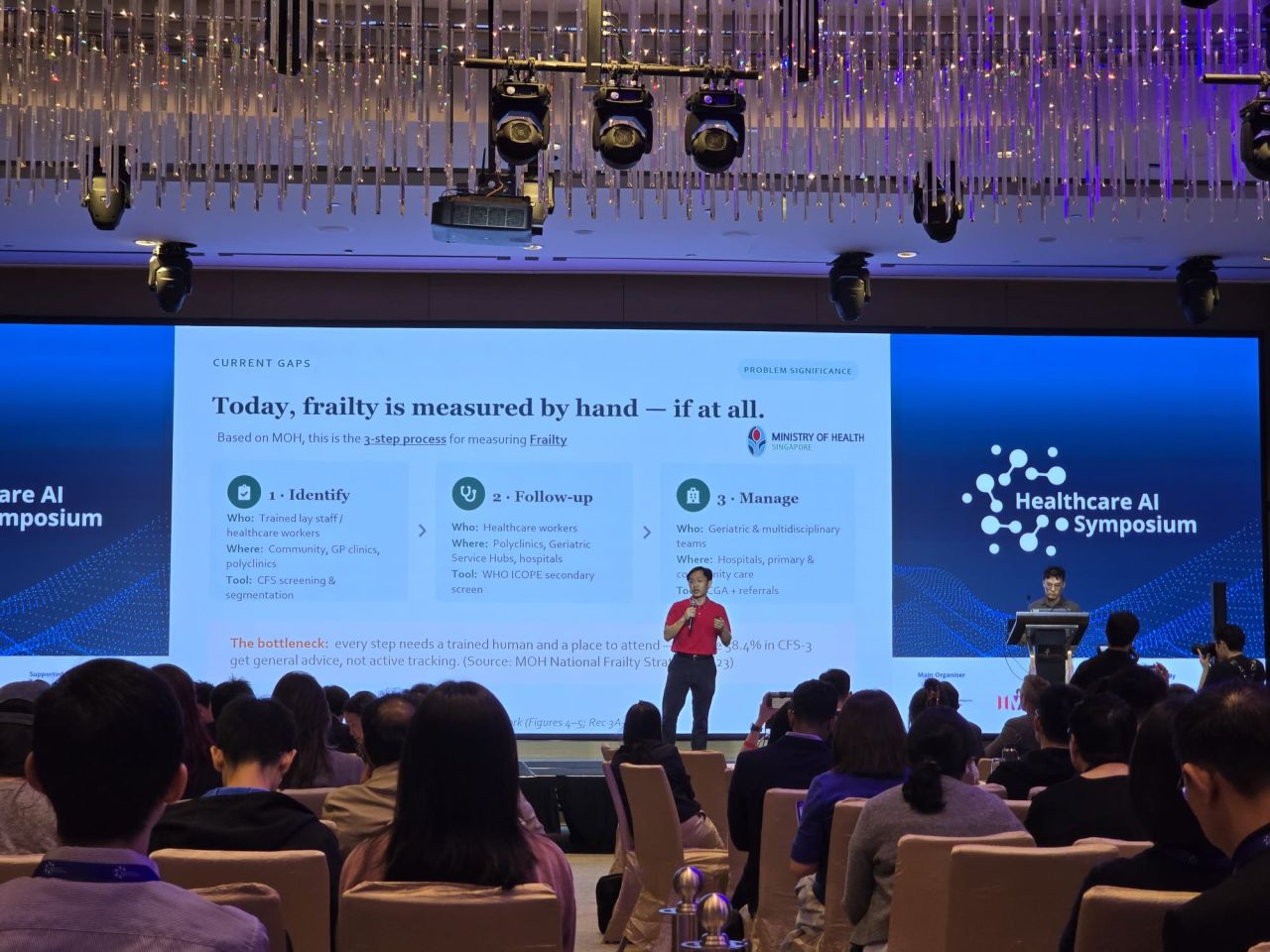
The team’s solution, CadenceAI, was designed to identify signs of frailty before small changes in mobility and cognition develop into more serious health issues.
Recognising that early intervention is key to improving both health span and quality of life, they developed a prototype that combines physical and cognitive screening into a single seamless experience.
Designed for use across polyclinics, Active Ageing Centres (AACs) and even home settings, CadenceAI demonstrates how AI can support prevention-focused healthcare beyond traditional clinical environments.
Leveraging AI-assisted development tools, the team also achieved an impressive level of technical execution, building the prototype within just 6 to 12 hours of active development.
Staying Calm Under Pressure
For the team, one of the most memorable moments came during the final results announcement. “The most exciting and nerve-wracking moment was after third place was announced, and it wasn’t us,” they recalled.
The tense wait reminded them of previous hackathon experiences, including reaching the finals of NUS HealthHack 2025 alongside international startups, student innovators and clinical teams.
Despite the pressure, the experience reinforced the importance of trusting both the process and one another.
Learning Beyond the Classroom
The team credits the NUS MSBA programme for equipping them with skills that extended far beyond technical development.
Their experience in the annual Business Analytics Innovation Challenge, organised by the NUS Business Analytics Centre as part of their NUS MSBA experience, provided valuable experience in not only building technically sound products but also crafting compelling presentations that resonate with diverse audiences.
More importantly, the programme taught them three lessons they consider essential for hackathon success: understanding the problem deeply, telling a compelling story that connects with both logic and emotion, and building teams with complementary strengths.
These experiences proved invaluable throughout the competition.
More Than Just Winning
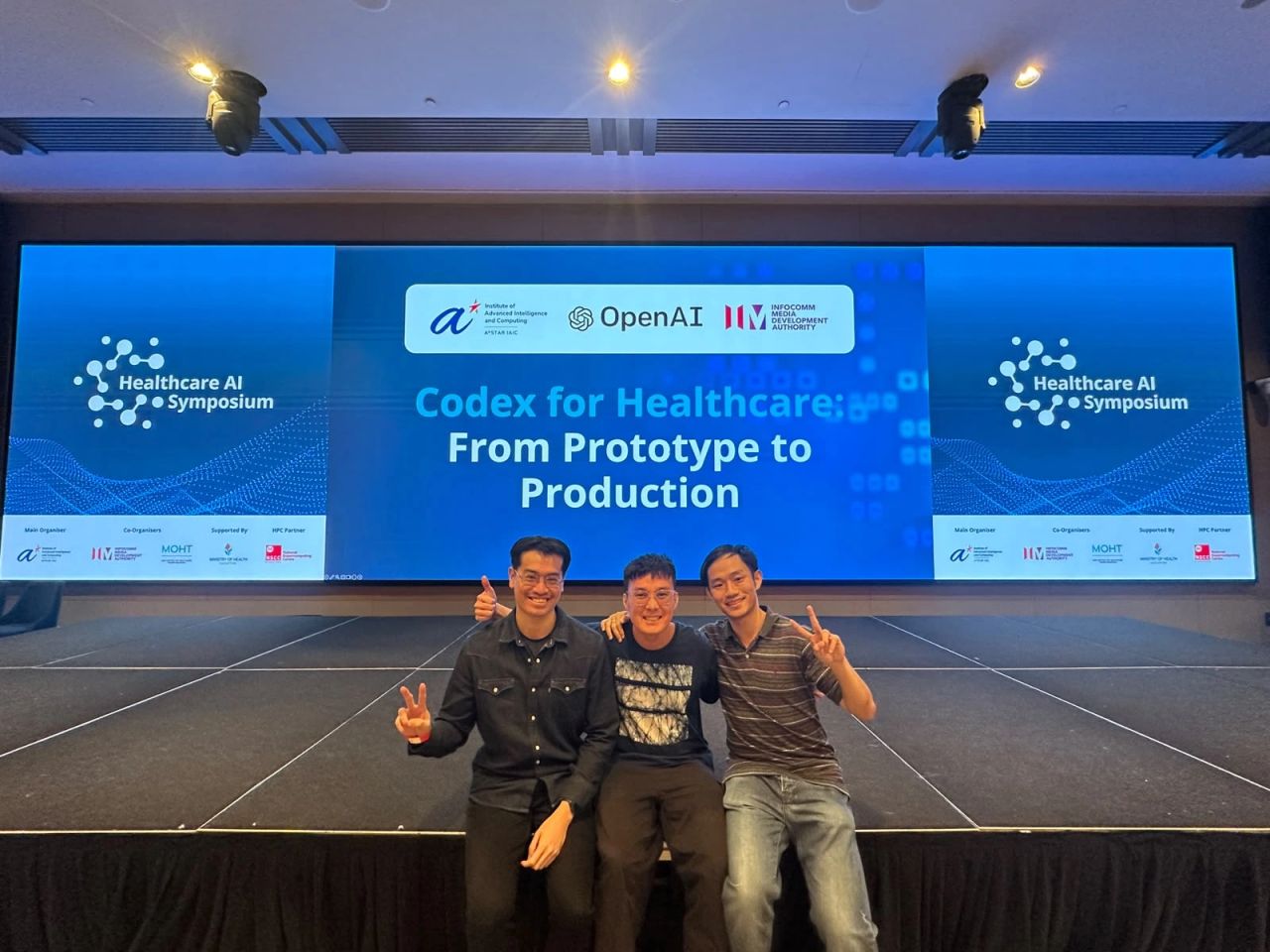
Looking back, the hackathon reaffirmed the value of working on projects driven by genuine purpose.
For the team, the experience showed that meaningful innovation happens when passionate people with different perspectives come together to solve important problems under pressure.
Their advice for future NUS MSBA students is simple: go for it.
“The uniqueness of NUS MSBA is that it blends technical rigour with business understanding. A hackathon is fundamentally about solving a business problem with a strong product, so teams who can do both well will stand out.”
They also emphasise that, regardless of the outcome, participating in hackathons offers invaluable opportunities to build experience, expand professional networks and grow both personally and professionally.
Their journey reflects what the NUS MSBA programme strives to develop: graduates who can combine analytics, AI and business thinking to create solutions that make a meaningful difference in the real world.
© National University of Singapore. All Rights Reserved.